
Best Driving School in the UK 2026: How to Choose the Right ADI
The “best driving school” isn’t a single brand—it’s the school that fits your goals, your schedule, your budget, and your learning style. In 2026, that also means checking how clearly a school communicates progress and whether it uses modern tools (like AI-powered lesson summaries) that help you learn faster between lessons.
This guide shows you what to compare, which questions to ask, and the red flags to avoid—so you can pick confidently and pass with less stress.
TL;DR (Quick Checklist)
- Credentials: Choose a DVSA-approved ADI with up-to-date insurance and dual controls.
- Pass-rate context: Look beyond a single percentage; ask how they prepare and assess readiness.
- Scheduling: Evenings/weekends, realistic travel time, and a sensible cancellation policy.
- Clarity: You should receive written feedback after every lesson.
- Tech: Schools that share AI-generated lesson summaries (e.g., via Varium) help you practice the right things at home.
1) Verify Credentials & Safety
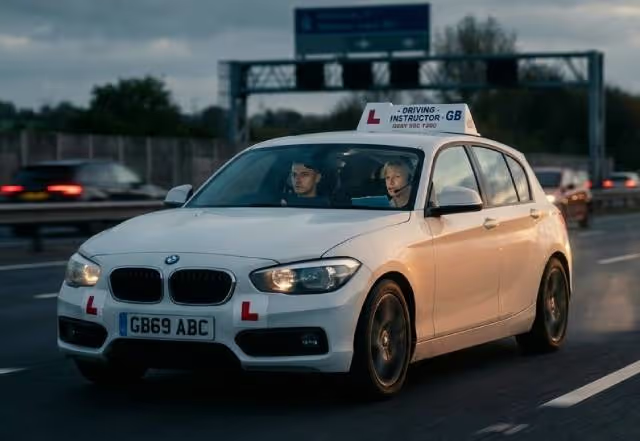
- Ask to see the green ADI badge displayed on the windscreen.
- Confirm insurance cover for instruction and that the vehicle has dual controls.
- A professional instructor will happily explain how they structure lessons and keep you safe from day one.
Green flags: calm, structured explanations; a plan for your first five lessons; no pressure to rush the test.
2) Understand Pass Rates (In Context)
High pass rates are great, but they don’t tell the whole story. Ask for context:
- How many learners do they teach each month?
- Do they run mock tests and provide a written action plan afterwards?
- What support do they offer if you need to reschedule a test?
Tip: Reviews that mention clear feedback and steady confidence building often correlate with real results.
3) Scheduling That Fits Your Life
- Check for evening/weekend availability and pickup zones.
- Ask how they handle cancellations and late changes (you want clarity, not surprises).
- Good schools plan realistic travel time between lessons so you’re not losing minutes to logistics.
4) Pricing Without Surprises
Compare like-for-like:
- Lesson length (60/90 mins), included mock tests, and test-day car.
- Packages that include post-lesson summaries and homework are worth more than “cheap hour” deals that leave you guessing.
- Transparent terms > teaser rates.
5) Vehicles & What You’ll Actually Drive
- Choose manual if you plan to own a manual; otherwise automatic/EV is fine and increasingly popular.
- If you’ll test in automatic/EV, train that way from the start.
- Ask about visibility, parking aids, and maintenance—confidence in the car builds confidence in yourself.
6) Progress You Can See (and Remember)
After each session you should receive clear, written notes with what went well, what to improve, and SMART goals for next time. Schools using AI-powered summaries (e.g., Varium) turn instructor notes into plain-English recaps you can re-read before practice—often with optional translations for parents.
Why it matters: Better recall between lessons = fewer repeated mistakes = fewer lessons overall.
7) Test Readiness: Evidence, Not Guesswork
A great instructor won’t push you to book early or hold you back without reason. Expect:
- Regular mock tests with marked feedback.
- A simple readiness summary explaining why you’re ready (or not yet) and the exact skills to polish.
8) Reviews & Word of Mouth (Recent Ones)
Look for recent reviews that mention punctuality, calm coaching, and clear communication. A single statistic is easy to market; consistent stories from real learners are harder to fake.
Questions to Ask Before You Book
- “What will my first 5 lessons cover?” (Look for a structured plan.)
- “How do you share feedback?” (You should receive a written recap every lesson.)
- “What’s your mock-test process?” (Expect clear action points.)
- “Can I train and test in automatic/EV?”
- “What’s your cancellation and test-day policy?”
Red Flags
- Pressure to book a test date before you’ve mastered basics.
- No written policies or shifting prices.
- No consistent lesson notes.
- Boasts about pass rates with no context or sample feedback.
Sample Learning Path (Adapt It With Your Instructor)
- Weeks 1–2: Control, observations, simple junctions. (Short recap after each lesson.)
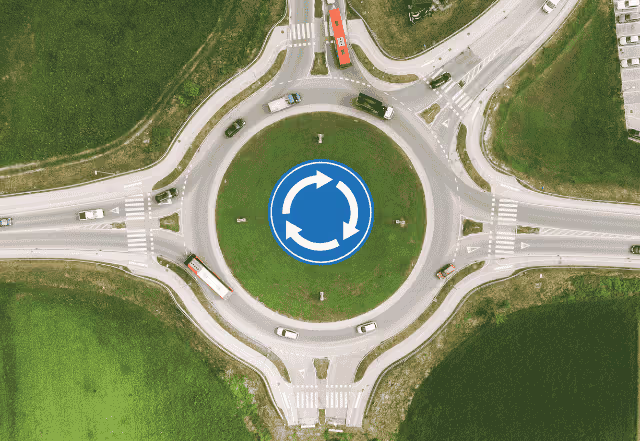
- Weeks 3–4: Roundabouts, urban hazards, parking. (SMART goals set.)
- Weeks 5–6: Night/motorway where allowed, independent driving. (Mock test + plan.)
- Weeks 7–8: Polish weak areas, route variety. (Mock test + go/no-go.)
FAQ
What is the best driving school in the UK in 2026?
There’s no single winner; pick the school that offers qualified ADIs, clear written feedback, mock tests, and transparent policies—ideally with AI-powered summaries so you stay focused between lessons.
How many lessons do I need?
It depends on prior experience and home practice. Measure progress by mock-test feedback and documented goals, not a fixed number.
Manual or automatic/EV?
Train in what you’ll drive post-test. If you’ll own an automatic/EV, start there.
The Bottom Line
The best UK driving school in 2026 teaches well in the car and communicates clearly between lessons. Use the checklist, ask for written feedback, and choose the team that proves your progress every week—ideally with the help of Artificial Intelligence-powered notes (e.g., Varium.app).