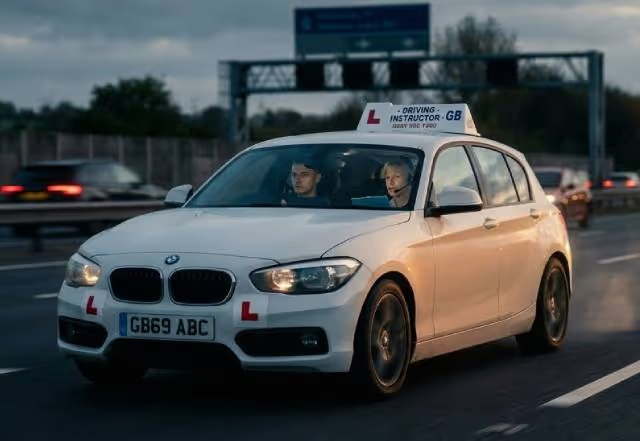
UK Driving Test 2026: More High-Speed Roads, Fewer Stops, and What It Really Means
Finally, the UK driving test is starting to look a little more like real driving.
For years, many learners have passed their test having spent most of the route in slower urban traffic, only to discover afterwards that faster roads, independent decision-making, and higher-risk situations feel very different in real life.
That is exactly why the DVSA has adjusted the car driving test.
So what has changed, what has not changed, and what should learners and instructors do differently in 2026?
The Big Shift: More Real-World Driving
The headline change is simple:
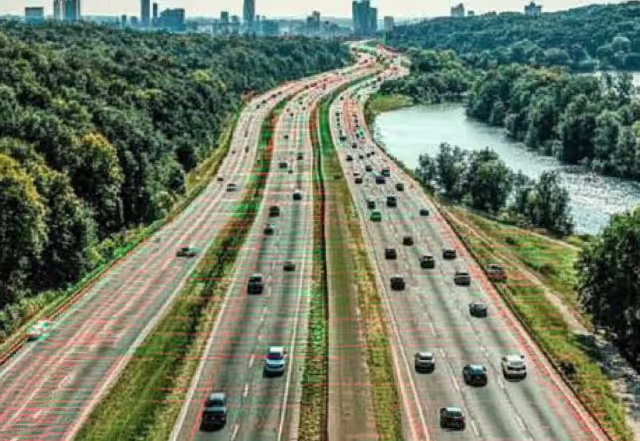
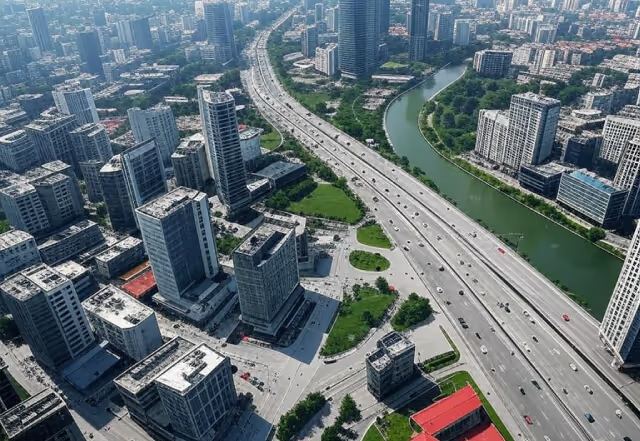
Learners are now being tested more often on faster and higher-risk roads, where local geography allows.
That means practical tests are being shaped to better reflect the roads people are actually going to use once they pass.
This is not about making the test unfair.
It is about making it more realistic.
Passing should mean you are ready for:
- faster dual carriageways
- changing speed environments
- longer stretches of independent decision-making
- more realistic transitions between road types
For learners, this is a mindset shift.
The goal is no longer just “get through the route.”
The goal is: show that you can drive safely beyond the test centre area too.
What Has Actually Changed?
Here are the most important practical takeaways for 2026.
1. More time on faster roads
Learners may now spend more of the test on:
- higher-speed roads
- more varied road types
- routes that better reflect real post-test driving
In some urban locations, the difference may be smaller. In more mixed or rural areas, the difference could be more noticeable.
2. Independent driving can last much longer
Independent driving is no longer just a short section in the middle.
It can now run for much more of the test, potentially for the full duration, using:
- sat nav
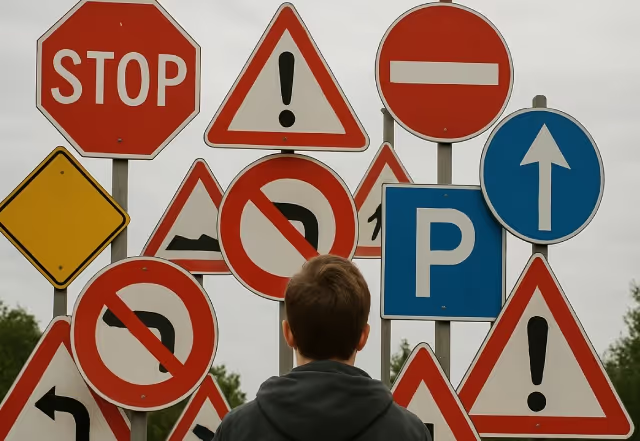
- traffic signs
- or a mix of both
This is a major clue about what the DVSA values: not just control of the car, but decision-making without constant prompting.
3. Fewer planned stops
The test now includes fewer unnecessary planned interruptions.
That makes the drive feel more continuous and closer to normal driving.
4. Emergency stops are much less frequent
Emergency stops still exist, but they are now used less often.
That means learners should still know how to do one properly, but they should not treat it as the centre of their preparation.
5. Manoeuvres are still part of the test
This part has not changed.
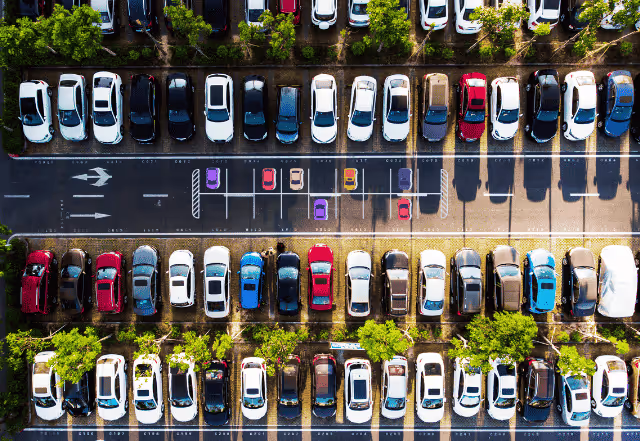
Candidates still need to complete one reversing or parking manoeuvre, such as:
- bay parking
- pulling up on the right and reversing
- other standard manoeuvre formats already used in the test
Why the DVSA Is Doing This
The logic is easy to understand.
A learner who can only drive comfortably in slow, familiar town routes is not fully prepared for real life after passing.
The updated format pushes training and testing a little closer to what matters most:
- adapting to different roads
- reading the environment earlier
- staying safe at higher speeds
- making good decisions with less help
In other words, the test is becoming less about “test tricks” and more about real readiness.
What Learners Should Do Differently Now
If you are learning in 2026, this is the wrong strategy:
- only practising in one area
- relying on memorised routes
- avoiding faster roads until the end
- expecting the examiner to guide most of the drive
A better strategy is:
Build variety into your lessons
Practise:
- town driving
- busier junctions
- dual carriageways where appropriate
- changing speed limits
- quieter roads and more open roads
Get used to following directions independently
Do not wait until the week before your test to use a sat nav.
Practise smooth transitions
A lot of driving mistakes happen not on one road type, but when moving between them.
Stay calm on faster roads
The DVSA is not asking for aggressive driving.
It is asking for safe, confident, well-judged driving.
What Driving Instructors Should Take From This
For instructors, this change is a signal.
The test is moving further away from:
- heavily coached route repetition
- over-focus on isolated manoeuvres
- urban-only preparation
And further toward:
- broader route planning
- independence
- confidence on varied roads
- genuine test readiness
This also makes good lesson records and progress tracking even more valuable. If a pupil is going to handle more varied road conditions, they need a clearer understanding of what they have already mastered and what still needs work.
Does This Make the Test Harder?
Not necessarily.
It makes the test more representative.
For some learners, that will feel harder because it reduces the comfort of predictability.
For others, it may actually feel more natural because the drive flows more like a normal journey.
The real change is this:
The UK driving test now rewards broader competence more than narrow route familiarity.
And that is probably a good thing.
FAQ
Has the UK driving test changed in 2026?
Yes. The practical test now places more emphasis on realistic driving, including more varied routes, more independent driving, and fewer planned stops.
Will I definitely drive on a fast road during my test?
Not always. It depends on the local area and whether those roads are available and suitable from that test centre.
Are manoeuvres still included?
Yes. Manoeuvre requirements remain part of the test.
Are emergency stops still in the test?
Yes, but they happen less often than before.
The Bottom Line
Finally, the driving test is moving closer to the kind of driving people actually do after they pass.
That is good news for road safety.
Good news for instructors who teach the full skill set.
And, in the long run, good news for learners too.
Because the best test is not the easiest one.
It is the one that prepares you for the road that comes after it.